When a child starts losing their first milk teeth, it is easy to see that something is changing. A tooth wobbles, another falls out, and shortly after, the permanent one appears.
With the first permanent molar, it is a different story.
Around the age of 6, a new tooth begins to erupt at the back of the mouth, behind all the milk teeth. No tooth has fallen out to make way for it. There is no gap waiting to be filled. It simply appears.
And that is precisely why it can go unnoticed.
Many parents look at that new molar and assume it is still part of the milk teeth. After all, the child still has practically all their other milk teeth and that tooth is in a hard-to-see area.
But it is not there temporarily. It is a permanent tooth and, if all goes well, it should stay with that child for the rest of their life.
It does not replace any milk teeth
The first permanent molar usually erupts approximately between the ages of 5 and a half and 7, although there is normal variation between children.
It erupts immediately behind the second milk molar. This means it increases the number of teeth in the mouth rather than replacing an existing one.
It is a simple difference, but an important one.
When the permanent incisors appear, there is usually a prior event that draws attention: a milk tooth has fallen out. With the six-year molar, that warning does not exist.
The child enters this stage in the so-called mixed dentition, during which milk teeth and permanent teeth coexist. Looking quickly into the mouth, it is not always obvious where one group ends and the other begins.
That is why asking ‘has a tooth fallen out yet?’ is not enough to know if the first permanent teeth have started to come through.
There may already be four first permanent molars in the mouth, two upper and two lower, even if no one has noticed their arrival.
Why is this tooth so important?
The first permanent molar is not just another back tooth.
Its position has a major influence on chewing and on how the upper and lower teeth make contact. It is also a relevant reference point in the development of the dentition and occlusion as the remaining permanent teeth emerge.
And there is a very practical issue: it is a tooth that appears early.
When it arrives in the mouth, the child is around 6 years old and is still developing the dexterity to brush their teeth truly effectively. They may want to do everything by themselves, but that does not mean they can properly reach all surfaces.
Furthermore, the first molar is at the very back of the dental arch at that moment. Reaching it with the toothbrush requires going further back than before.
While it is partially erupted, part of the crown may still be covered by the gum. Its position changes progressively, and brushing can become less intuitive.
In other words, we have a newly erupted permanent tooth, in a hard-to-reach area, at an age when oral hygiene still frequently requires supervision.
It is a combination that deserves attention.

At 6 years old, it is still too early to brush independently
There is a difference between letting a child take part in their own oral hygiene and handing over all responsibility to them.
At this age, it is positive for them to learn how to brush and gain independence. However, the coordination needed to systematically clean all surfaces is still developing.
The back teeth are precisely the ones that are most easily forgotten.
A simple strategy is for parents to let the child start the brushing and then do a follow-up check, especially at the end of the day. The goal is not to take away independence, but to ensure that newly erupted permanent teeth receive the same attention as the front teeth.
Fluoride toothpaste, used according to age and professional guidance, continues to play an important role in caries prevention.
It is also important to look at the frequency of sugar, not just the amount.
Eating a sugary food once does not have the same impact as repeatedly exposing the teeth to sugary foods or drinks throughout the day. Each exposure creates conditions for a fresh drop in pH near the tooth.
Prevention therefore does not depend on a single measure. It is the result of a combination of hygiene, fluoride, diet, risk assessment, and monitoring.
What if the molar erupts with spots or is very sensitive?
There is another reason to observe these teeth when they start to appear.
Some first permanent molars may show enamel defects right from eruption. Well-demarcated creamy-white, yellow, or brown patches can appear. In certain cases, the tooth may be more sensitive or the enamel less resistant.
One of the conditions that may be associated with these characteristics is molar-incisor hypomineralization, commonly known by the acronym MIH.
It can affect one or more first permanent molars and, sometimes, the permanent incisors as well.
Not all spots represent MIH, and a colour change noticed at home does not allow for a diagnosis. However, a newly erupted molar with a different colour, significant sensitivity, or areas where the enamel appears to be weakening should be evaluated.
The earlier these situations are identified, the sooner appropriate protection measures, sensitivity control, and monitoring can be put in place, tailored to the degree of the existing defect.
Ignoring the tooth because you think ‘it must still be a baby tooth’ is precisely what is best avoided.
The first permanent molar does not wait for the rest of the dentition
At the age of 6, a child’s mouth may look almost the same as it did the year before. There are still many baby teeth, the smile has not changed radically, and perhaps only one or two incisors have started to wobble.
Yet further back, teeth that will need to last for many decades may already be emerging.
It is this silent feature of the first permanent molar that justifies special attention.
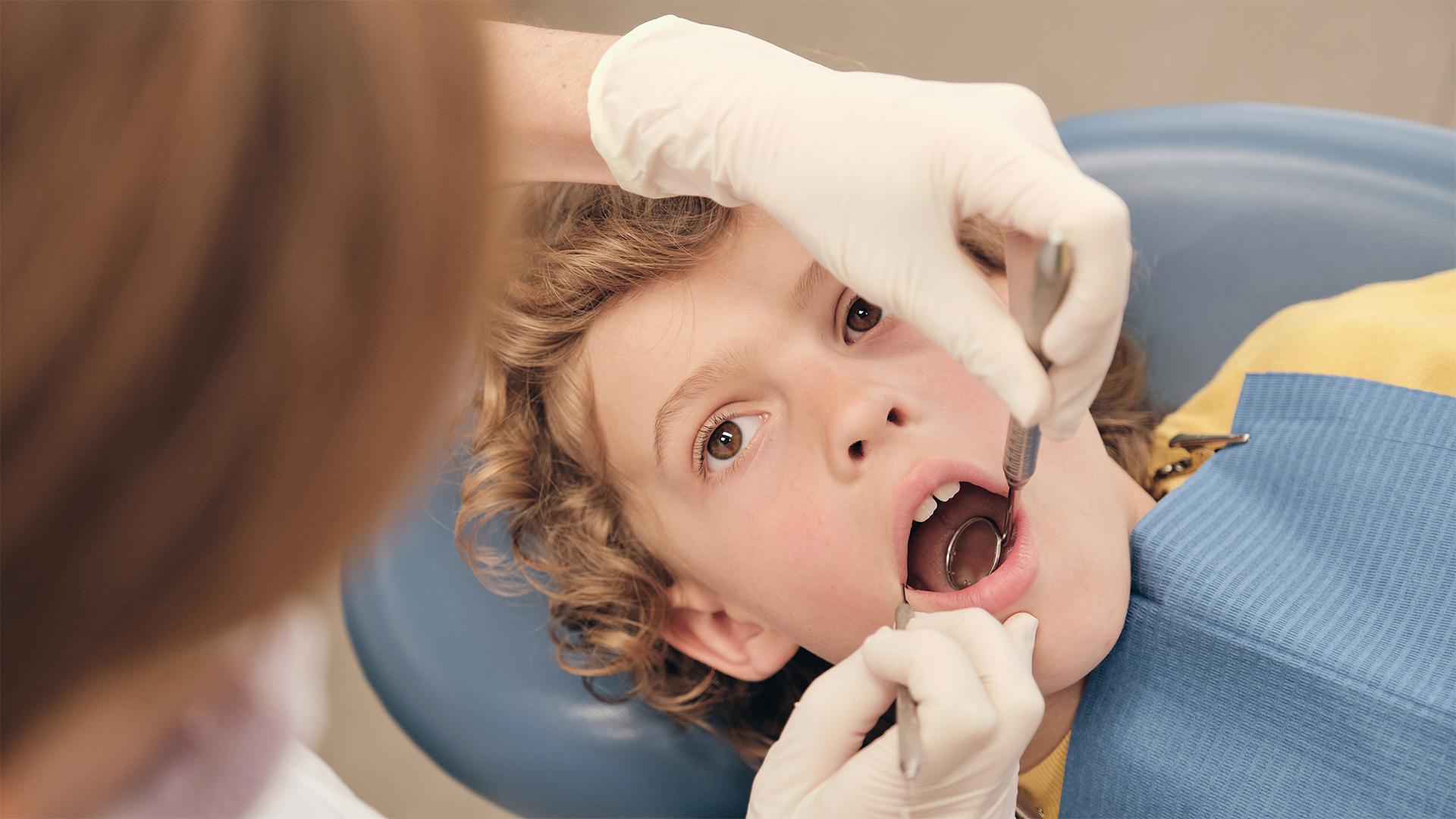
There is no need to wait for pain, a visible cavity, or the obvious start of tooth exchange to understand how the dentition is developing. An assessment at this stage makes it possible to confirm which teeth have already erupted, evaluate hygiene, identify risk factors, and decide whether any additional preventive measure is needed.
At Clinicalvor, the assessment of children’s dentition is not limited to looking for cavities. It also makes it possible to monitor the transition between baby teeth and permanent teeth, and to help the family understand what has changed and where more attention is needed.
Because the 6-year molar can arrive without warning. But once we know where to look for it, it is no longer so easy to forget.