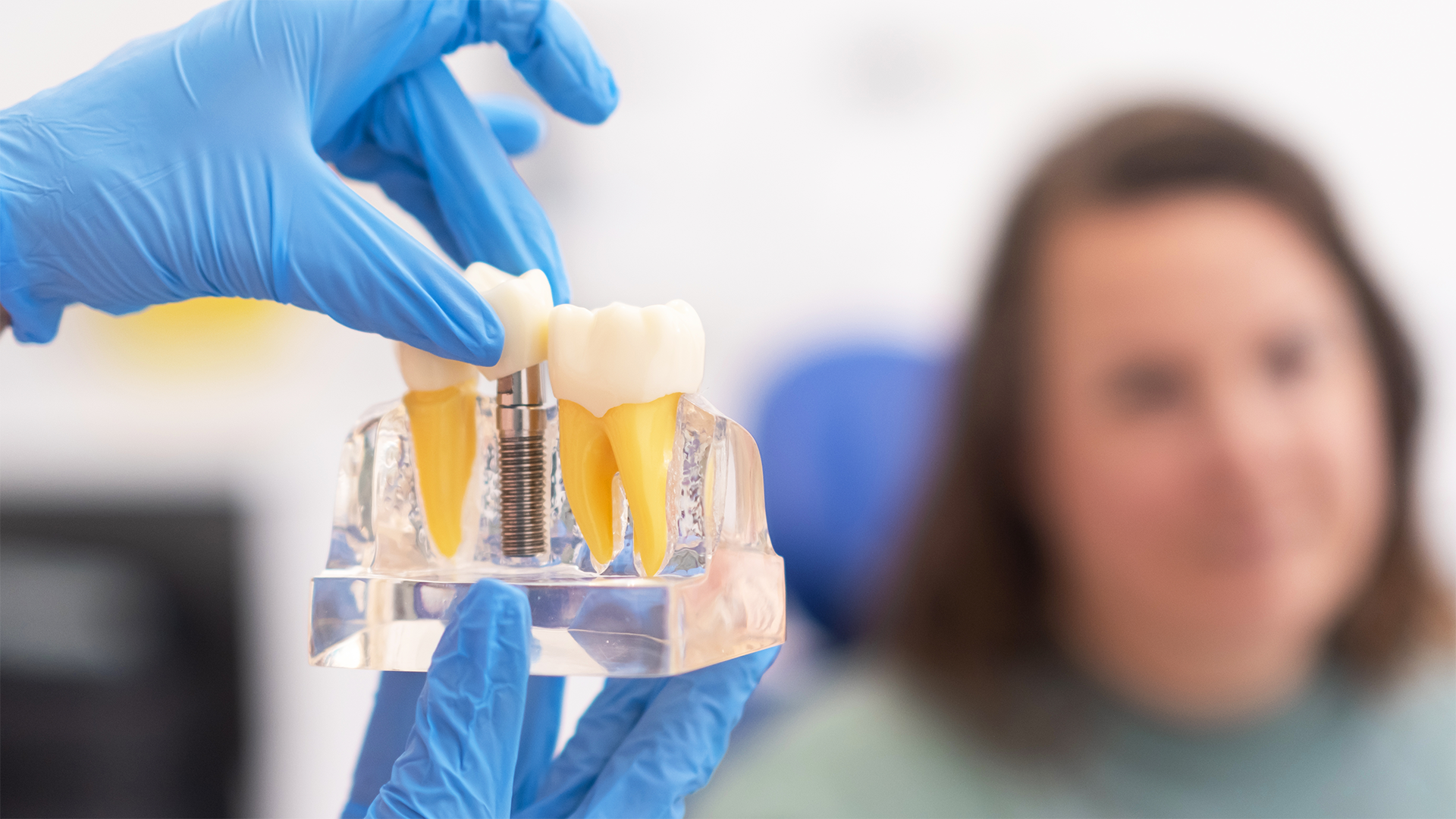
There’s a question that often comes up during consultations: “How long does an implant last?” It’s a valid question, but it’s based on an assumption that doesn’t always match reality. Many people assume that an implant’s lifespan depends mainly on the material used or the surgical technique. The truth is more interesting. An implant neither fails nor lasts for decades because of a single factor. The outcome is shaped by a series of decisions that begin long before surgery and continue throughout the entire lifespan of the restoration.
That is precisely why two seemingly identical implants can have completely different outcomes. One remains stable for decades, while the other develops complications much sooner. The difference rarely comes down to luck. It lies in the diagnosis, the planning, the patient’s habits, the maintenance, and how all these factors work together.
Success begins before surgery
When it comes to dental implants, the surgery tends to get all the attention. However, a significant part of the success happens before any implant is placed.
The first step is to determine whether the patient is truly a good candidate for treatment. The quality and quantity of available bone, gum health, oral hygiene habits, smoking, systemic diseases, and even the way a person chews all influence the prognosis.
An implant placed in healthy, well-prepared bone starts off on the right foot. On the other hand, when there are uncontrolled periodontal problems, persistent gum inflammation, or uncontrolled medical conditions, the risk of complications increases significantly.
At Clinicalvor, the initial evaluation is designed specifically to identify these factors before proceeding with treatment. The goal is not simply to place an implant; it is to create the conditions necessary for that implant to remain functional for many years to come.
Digital planning has transformed implantology
For many years, dental implantology relied primarily on clinical experience and two-dimensional imaging. Today, technology allows us to analyze each case in much greater detail.
Three-dimensional radiology and digital planning systems allow for the visualization of the patient’s anatomy in three dimensions, the identification of key anatomical structures, and the determination of the optimal implant position prior to surgery. This approach enhances predictability and helps optimize both the surgical procedure and future prosthetic rehabilitation.
One detail that is often overlooked is that an implant should not be placed simply where there is bone. It should be placed where it will support a functional, comfortable, and easy-to-clean prosthesis. Modern implantology first plans the final result and then positions the implant to achieve that result.
This approach reduces risks, improves the distribution of chewing forces, and contributes to greater long-term stability.
The silent enemy is called peri-implantitis
When people think of implant failure, they usually picture a surgery that went wrong. In reality, many complications arise years later.
One of the most serious is peri-implantitis, an inflammation of the tissues surrounding the implant that can lead to progressive bone loss. The problem is that, in its early stages, it does not always cause pain. It often progresses silently.
Bleeding gums, persistent inflammation, difficulty with oral hygiene, or minor changes in stability can be warning signs. The sooner they are identified, the better the chances of managing the situation.
Here lies an important difference between natural teeth and implants. Many people believe that once an implant is placed, the problem is solved for good. But implants are not “maintenance-free.” Just like natural teeth, they require regular checkups and careful oral hygiene.
In many cases, the longevity of the implant depends more on maintenance than on the initial surgery.
The role of daily habits is greater than it seems
There is a tendency to place all the blame on the healthcare professional. Of course, clinical experience and the quality of care are key factors. But the patient’s involvement remains essential.
Tobacco is one of the clearest examples. It is associated with reduced blood flow to tissues, slower healing, and a higher risk of biological complications around implants. The scientific literature has consistently shown that smokers have higher failure rates compared to nonsmokers.
Oral hygiene is another key factor. While an implant itself does not develop cavities, the tissues supporting it can become diseased. Proper brushing, the use of recommended oral care products, and regular checkups are essential for maintaining peri-implant health.
There are also less obvious factors. Bruxism, clenching, missing teeth that haven’t been replaced in other areas of the mouth, and changes in bite alignment can increase mechanical stress on the implants over time. These factors don’t always cause immediate problems, but they can affect the overall durability of the implants.
The prosthesis is just as important as the implant
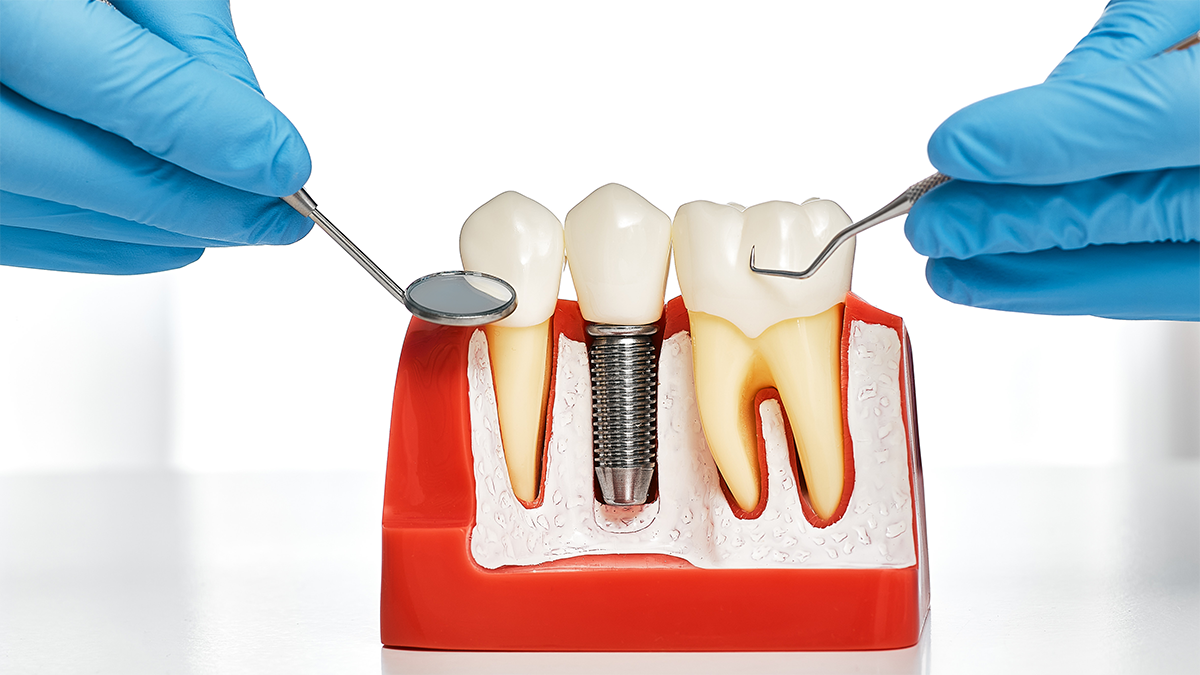
When someone says they have an implant, they usually mean the entire system. But technically, we’re talking about several different components.
There is the implant that integrates with the bone. There is the prosthetic connection. There is the crown, bridge, or denture that is visible. And there are the tissues that support all of this.
If one of these components fails, the overall result may be compromised.
A well-designed denture facilitates daily oral hygiene, distributes chewing forces more evenly, and contributes to tissue stability. Conversely, a denture that is difficult to clean or subject to improper loading can accelerate biological and mechanical problems.
That is why modern implantology is no longer just a surgical procedure. It is a combination of surgery, prosthetics, digital diagnostics, and ongoing clinical follow-up.
What really increases the chances of an implant lasting for decades
When we look at cases that remain stable for many years, consistent patterns emerge.
- There is a definitive diagnosis.
- Existe planeamento cuidadoso.
- Risk factors are being monitored.
- Regular maintenance is performed.
- There is a relationship of continuity between the patient and the clinical team.
None of these elements is particularly spectacular. But it is precisely this combination that produces lasting results.
The right question isn’t whether an implant can last twenty years. Scientific evidence shows that many implants can outlast that period under favorable conditions. The more useful question is this: what are we doing today to increase that likelihood?
The answer rarely lies in a single material, a single brand, or a single technology. It lies in the combination of well-informed clinical decisions and consistent practices over time. And it is this combination that remains the most important factor in turning an implant into a truly long-lasting treatment.