There’s a promise that comes up every year around this time. In the summer, I’ll eat better, lighter meals—more salads, less of this and that. Then the real heat hits, and the plan falls apart in a curious way. At lunch, I hardly feel like eating anything, because when it’s in the high thirties, my body just craves shade and water. At night, when it cools down, you open the fridge as if seeking delayed revenge. In between, there’s the afternoon ice cream, the cold beer, and the snacks from the outdoor café that no one can resist. At the end of the month, the scale and the mirror contradict that initial promise, and you’re left with the feeling that your hunger simply went haywire without warning. The good news is that this isn’t a lack of willpower. It’s summer messing with—seriously—the signals that regulate what the body craves. And once you understand how it works, it stops being a mystery and becomes something you can manage.
The heat takes away your appetite at lunchtime and brings it back at midnight
The first factor in this confusion is the most physical of all. Digesting a meal generates heat—this is known as the thermic effect of food—and when the body is already struggling with high ambient temperatures, it avoids adding more heat to an overheated system. The result is a diminished appetite during the hottest hours of the day. Studies on temperature and eating habits show precisely this: the amount of food consumed tends to decrease as the environment warms up. The problem is that this hunger doesn’t disappear—it just shifts to a different time of day. When the sun goes down and the air cools, it returns with a vengeance, often in the form of a late dinner and whatever is eaten afterward, usually without much restraint. People convince themselves that they ate very little during the day—and in part that’s true—but the balance is settled entirely at night. The mistake lies in focusing only on the skipped lunch and forgetting everything that came after sunset, which is usually higher in calories and less thoughtfully chosen than what was avoided at 2:00 p.m.
Sleeping poorly in the heat makes you hungrier the next day
Few things ruin a night’s sleep as much as a hot bedroom. Sleep becomes shorter, lighter, and more interrupted, and this has direct consequences the next day. Research on sleep deprivation is consistent on one point: short nights are associated with increased hunger and higher calorie intake the next day, with a particular craving for carbohydrates and anything that’s quick and sweet. The most widely accepted explanation involves the balance between two hormones: leptin, which signals satiety, and ghrelin, which stimulates appetite, although the exact hormonal picture remains a subject of scientific debate. For our purposes here, the message is simple and practical. A bad night of heat sets the stage for a day of increased hunger, and summer is full of such nights. Anyone who experiences several of these in a row—between the stuffy bedroom and the long, drawn-out evenings—accumulates fatigue that the body tends to compensate for in the most immediate way it knows: food. It’s not weakness; it’s biology demanding quick energy from those who’ve had little sleep.
My routine went on vacation, and hunger followed
The body likes routines. It learns to anticipate meals that usually arrive at the same time and regulates hunger and satiety around that predictability. Summer does exactly the opposite. Mealtimes stretch out, the days seem endless, and between the beach, social gatherings, and impromptu snacks, opportunities to eat multiply without any real hunger driving them. When that structure disappears, the body’s internal signals get confused, and we end up eating more out of convenience than out of necessity. The snack within reach, the dessert everyone ordered, the appetizer that drags on. None of this is true hunger, but the body, without the anchor of a schedule, can no longer clearly distinguish one from the other.
The drink that whets your appetite without breaking the bank
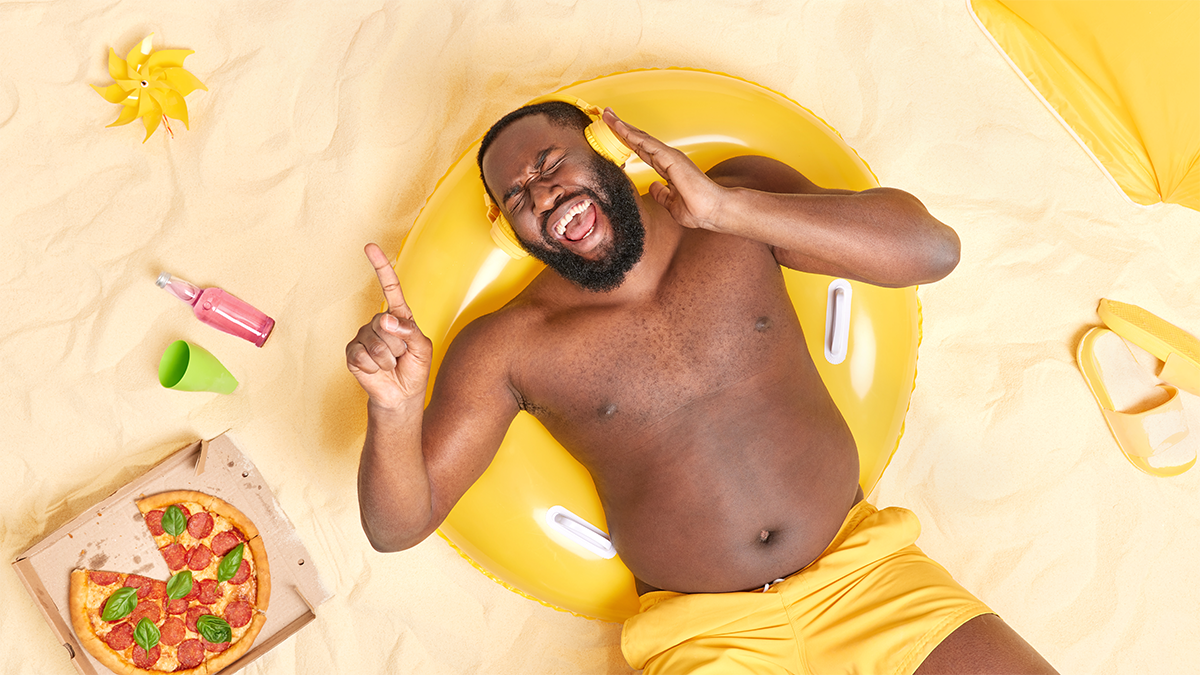
Summer is the season for drinks. Sangria in the afternoon, a cold beer at the end of the day, wine with dinner on the patio. And this is where a well-documented phenomenon comes into play: the aperitif effect. Alcohol consumed before or during a meal increases the amount of food eaten, and scientific reviews on the subject show that people do not compensate for those calories later—in other words, they eat just as much as they would have anyway and add the calories from the drink on top of that. Added to this is a detail that often goes unnoticed. Ice cream, juices, and cold sodas are “liquid calories”—easy calories that slip in almost unnoticed and are far less filling than a proper meal. Taken together, they add up silently and rarely show up in your mental tally for the day. An afternoon of sangria with a few snacks can, on its own, be equivalent to an entire meal—without leaving you feeling like you’ve actually eaten a meal. That’s the treacherous side of liquid calories: they come in through the back door and don’t ask permission from your sense of fullness.
When thirst masquerades as hunger
There is also a misconception that heat exacerbates. Through sweating, the body loses more fluids, and the signs of thirst and mild hunger are easily confused. A person feels a sense of emptiness, interprets it as hunger, and goes to eat, when in fact what was missing was water. It’s not a hard-and-fast rule, and it’s best not to turn it into a dogma, but it happens often enough to be worth trying out. A glass of water and a few minutes of waiting can satisfy many cravings that, in the end, weren’t hunger at all. Keeping a water bottle nearby and drinking throughout the day—without waiting until you’re thirsty—is one of the simplest and most underrated habits for getting through the summer without eating on autopilot.
Eat with your body, not with a thermometer
Summer isn’t anyone’s enemy—and certainly not the scale’s. What changes—and significantly so—are the cues that normally guide our eating habits, from the heat to sleep, from our daily routine to what we drink. Realizing this lifts the burden of guilt and puts you back in control, because the problem is no longer a character flaw but rather a set of manageable factors. Sticking to regular meal times even when the heat is on, prioritizing fresh food and protein that truly satisfies, keeping water on hand, and being mindful of alcohol consumption are steps that make a difference without spoiling the season’s enjoyment. And when the goal is methodical weight management, a Nutritional Status Analysis helps design a plan that adapts to summer rather than fighting against it. That’s the focus of Clinicalvor’s weight-loss support in Alvor and Portimão: tailoring nutrition to each person and each season. Because eating well in the summer isn’t about resisting all the season’s delights—it’s about listening to your body again when it speaks more softly than the heat, the drinks, and the vacation clock.
References
- https://www.ncbi.nlm.nih.gov/pmc/articles/PMC4500895/
- https://pmc.ncbi.nlm.nih.gov/articles/PMC4444051/
- https://www.cambridge.org/core/journals/british-journal-of-nutrition/article/effect-of-alcohol-consumption-on-food-energy-intake-a-systematic-review-and-metaanalysis/2F9AB5C64A86329EB9E817ADAEC3D88C