When a tooth hurts, it’s easy to tell that something might be wrong. The most misleading scenario is the opposite: there is no pain, chewing is normal, and yet the dental pulp is severely compromised or has already lost its vitality.
Yes, a tooth may need root canal treatment even if it isn’t causing any pain.
This is because pain is only one of the possible signs of pulp disease. It is not a prerequisite for the presence of a lesion. In certain situations, inflammation may progress with few symptoms, and pulp that has undergone necrosis may even cease to respond to stimuli that would previously have caused pain.
Therefore, in endodontics, a diagnosis should never be based solely on the question “Does it hurt or not?” It is necessary to consider the tooth’s history, the clinical examination, the tests performed during the appointment, and the radiographic findings.
What happens to the pulp when a tooth becomes diseased?
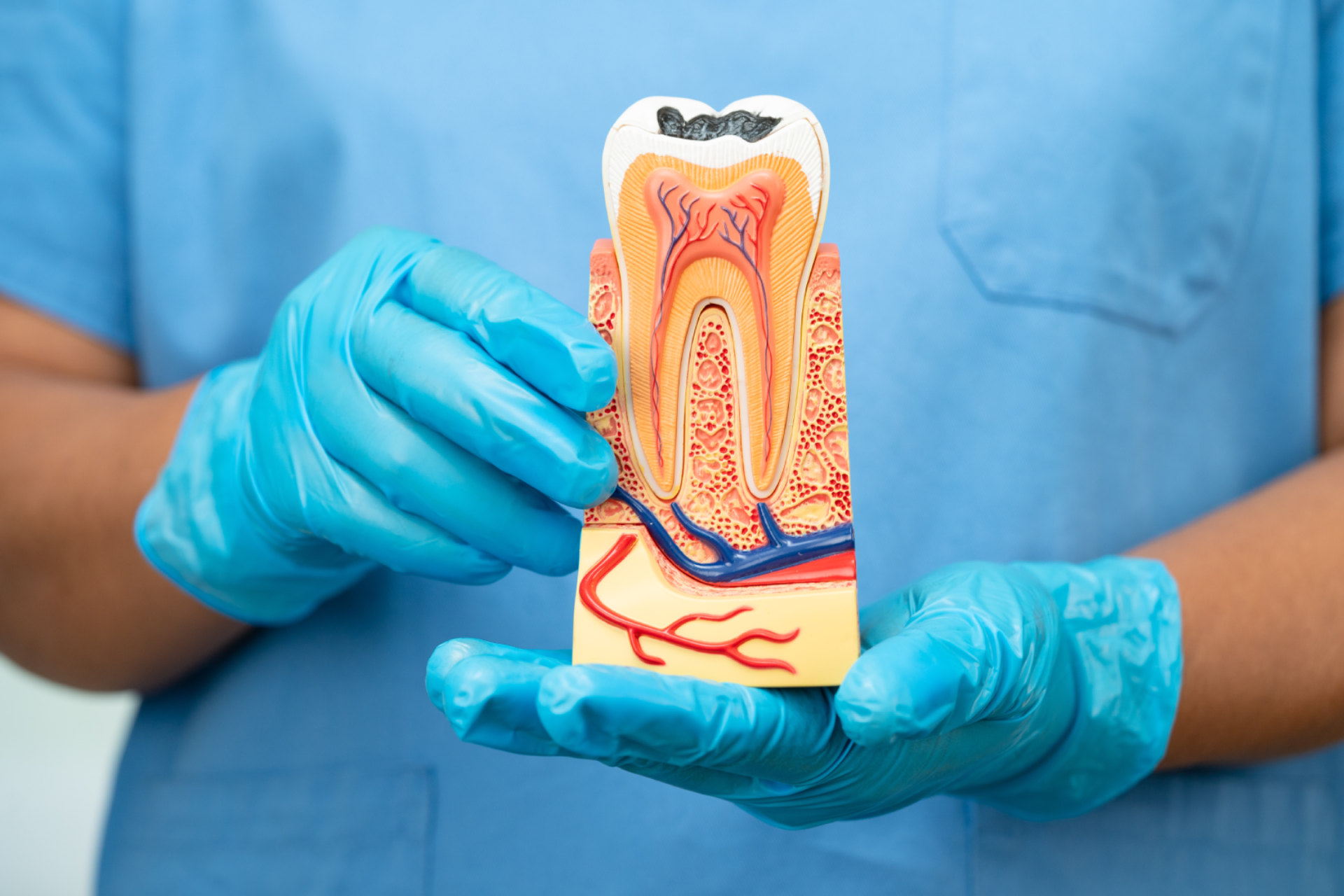
At the center of the tooth is the dental pulp, a tissue that contains blood vessels, nerve fibers, and cells with various biological functions.
Deep decay, trauma, a crack, previous restorative procedures, or other forms of damage can cause inflammation of this tissue. In the early stages, the pulp may be able to recover if the cause is eliminated. In other situations, the damage becomes too extensive for such recovery to be expected.
This is where clinical evaluation becomes important.
More severe pulp inflammation can cause spontaneous pain or an intense, prolonged response to cold or heat. However, not all teeth follow this pattern. There are cases in which advanced pulp disease presents with mild symptoms, and others in which there are virtually no symptoms at all.
If the pulp completely loses its vitality, there is no longer any functional pulp tissue capable of responding normally to stimuli. A “silent” tooth, therefore, may not indicate recovery. It may mean exactly the opposite.
Not feeling pain doesn’t mean you’re healthy
This is probably the most important point in this article.
We’re used to thinking of pain as a warning system. In the mouth, however, this mechanism doesn’t always work in a straightforward way.
A tooth whose pulp has undergone necrosis may remain asymptomatic for some time. However, microorganisms and byproducts of the infection can reach the tissues near the root tip and trigger an inflammatory response.
In some cases, this abnormality is only discovered on an X-ray taken for another reason.
In other cases, a small fistula forms in the gum. It may look like a “pimple” that appears and disappears and through which fluid drains. As the pressure is released, the patient may continue to experience no significant pain.
The opposite can also happen: a tooth goes through a painful episode and, some time later, stops causing any discomfort at all. This apparent improvement does not mean that the problem has gone away.
Therefore, when there is a suspicious change, waiting for it to start hurting is not a safe strategy.
There are more subtle signs that deserve attention
Severe pain is just one of the possible symptoms.
A change in tooth color can occur, for example, after an injury. A tooth that gradually darkens should be evaluated, even if it remains pain-free.
A small fistula in the gum also warrants further investigation. Although it may be painless, it could be associated with an endodontic infection.
Another important sign is a sensitivity that does not go away quickly after the stimulus is removed. It’s different to feel a brief shock from a cold drink than to feel pain that lingers long after the cold has gone away.
There may also be discomfort when chewing or tapping the tooth, a sensation that the tooth is “higher,” previous episodes of pain, or abnormalities detected on an X-ray.
None of these signs, on its own, indicates that a root canal is necessary. They serve to raise a possibility that needs to be confirmed through diagnosis.

How can you tell if the pulp is still healthy?
Endodontic diagnosis is like a puzzle. No single piece should be interpreted on its own.
First, there is the medical history. It is important to determine whether there has been pain, past trauma, deep fillings, episodes of swelling, or other abnormalities.
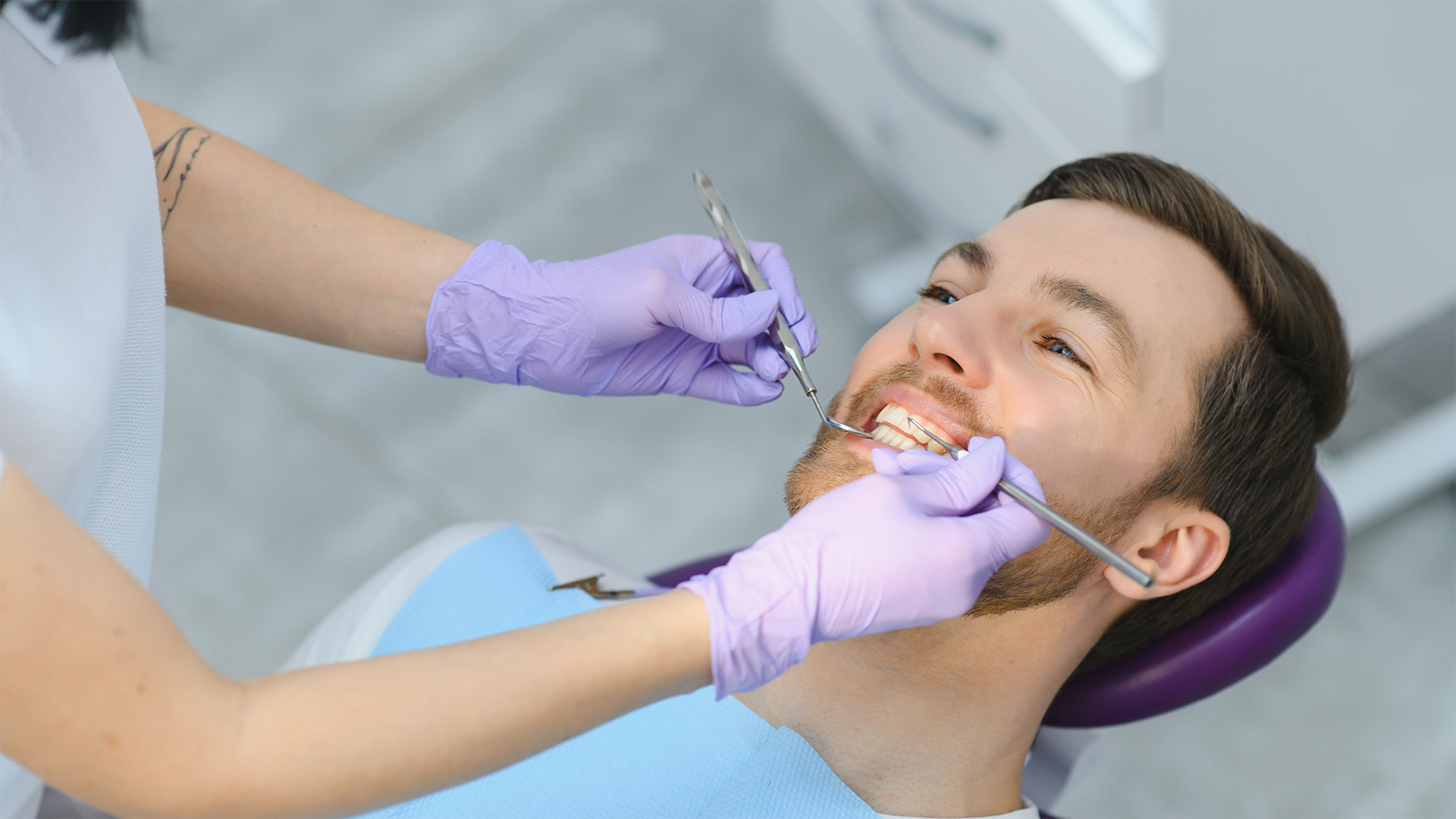
Next comes the examination of the tooth and the surrounding tissues. This may include cold tests, electrical tests, percussion, palpation, and periodontal evaluation, among other procedures selected based on the specific case.
They are often referred to as “vitality tests,” but there is an interesting distinction here. The tests commonly used in the dental office, such as the cold test or the electrical test, primarily assess the pulp’s sensory response. Technically, these are pulp sensitivity tests. True vitality is related to the presence of blood circulation in the tissue.
This difference explains why no single test should be interpreted in isolation.
A tooth that does not respond to cold should not automatically be considered necrotic. The response should be compared with control teeth and analyzed in conjunction with the other clinical data.
An X-ray provides another important piece of information. It can reveal deep cavities, changes near the root, or other factors relevant to the diagnosis. But here, too, there is one essential rule: an X-ray image alone does not diagnose the condition of the pulp.
The diagnosis is based on the consistency between the patient’s history, physical findings, test results, and imaging findings.
If it doesn’t hurt, why treat it?
When pulp necrosis is associated with an infection of the root canal system, there is no advantage in waiting for pain to develop.
The goal of endodontic treatment is to remove the infected or necrotic tissue from inside the root canal system, disinfect that space as thoroughly as technically possible, and seal it properly, allowing the tooth to be restored afterward.
This procedure is commonly referred to as “root canal treatment.” The more precise clinical term is endodontic treatment or root canal treatment.
There is also an important nuance. Not all inflamed pulp automatically leads to complete devitalization. Contemporary endodontics includes, in select situations and when favorable biological conditions exist, procedures to preserve vital pulp.
This further underscores the importance of early diagnosis.
The sooner the problem is identified, the more information is available to determine the appropriate course of action. Deliberately waiting until severe pain sets in does not improve the condition of the tooth and may allow the disease to progress.
The goal is to preserve the tooth, when conditions allow it
Endodontics has a very specific purpose: to treat pulp and apical diseases with the goal of preserving the natural tooth’s function in the mouth.
At Clinicalvor, an endodontic evaluation is based on the diagnosis and not simply on the presence of pain. An asymptomatic tooth may be healthy, may have a condition that simply requires monitoring, or may have a disease that requires treatment. Only an evaluation can distinguish between these situations.
Nor would it be correct to say that all teeth can be saved through a root canal.
Before proceeding, it is necessary to determine whether there is sufficient tooth structure to restore the tooth, whether there are significant fractures, what the periodontal status is, what the endodontic prognosis is, and whether it is possible to predictably restore function.
When these conditions are present, endodontic treatment can prevent extraction and allow the tooth to be preserved for many years.
The most important message, therefore, is simple: the absence of pain is good news only when we know that the tooth is healthy.
If there is a change in color, a fistula, prolonged tenderness, a history of trauma, or a suspicious radiographic finding, there is no need to wait until it becomes painful to investigate.
References
- https://www.aae.org/specialty/newsletter/endodontic-diagnosis/
- https://www.aae.org/specialty/a-concise-guide-to-pathology-within-endodontics/
- https://www.e-s-e.eu/for-professionals/resources-for-clinicians/
- https://www.clinicalvor.pt/medicina-dentaria/endodontia/