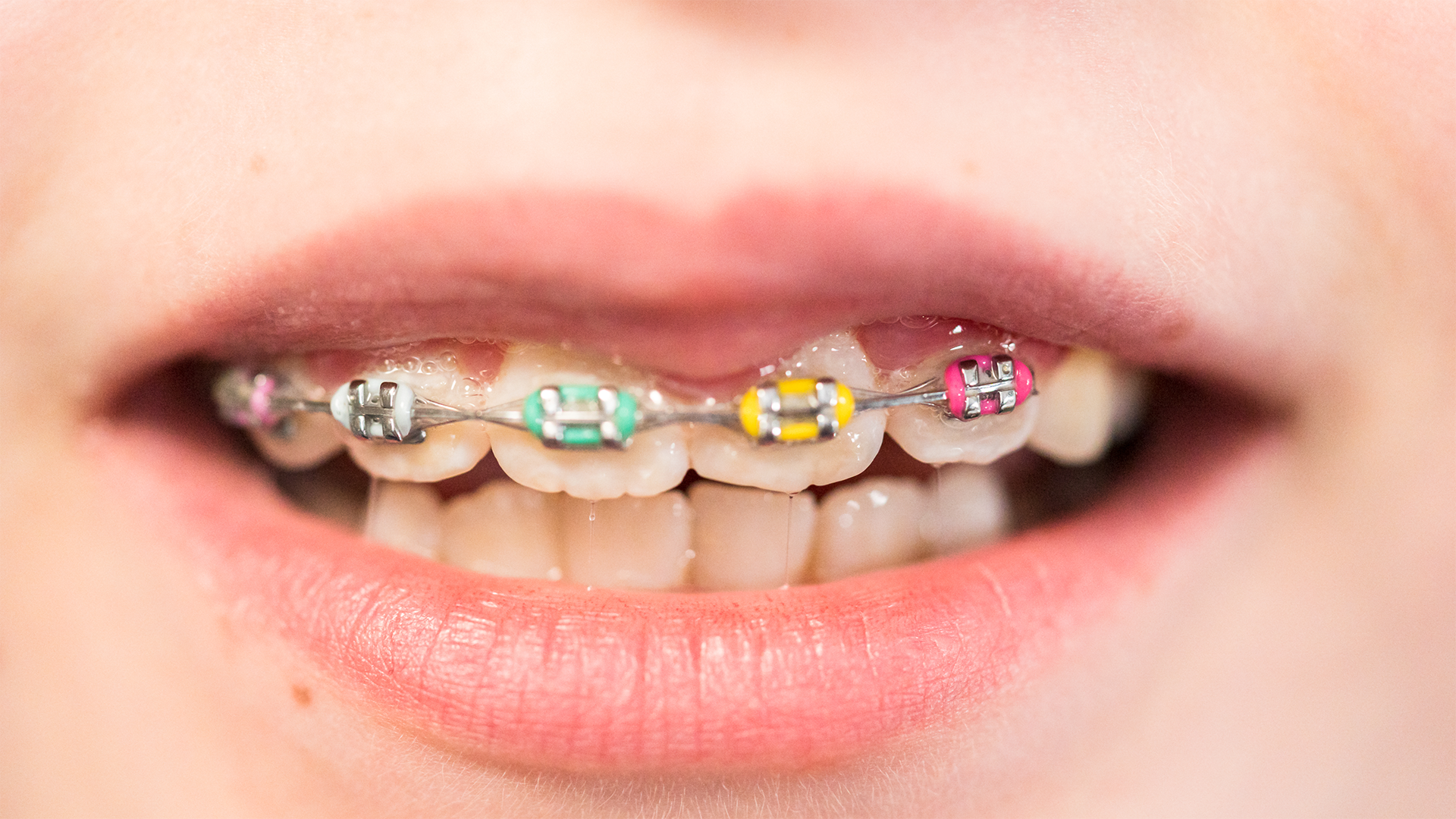
A question often arises when two problems occur together: misaligned teeth and one or more missing teeth. The solution may seem obvious. First, the missing tooth is replaced, and then the remaining teeth are straightened. However, in many cases, doing exactly that can make the treatment more difficult.
The reason lies in a fundamental difference between natural teeth and implants. Teeth can be moved using orthodontics. A dental implant, once integrated into the bone, does not behave in the same way. Its position is, in practice, fixed.
That is why, when orthodontics and implantology are part of the same treatment plan, the order in which they are carried out is not a mere detail. It can determine where the implant will be placed, how much space will be available, how the teeth will fit together, and even whether the implant is actually necessary.
Orthodontics often comes first
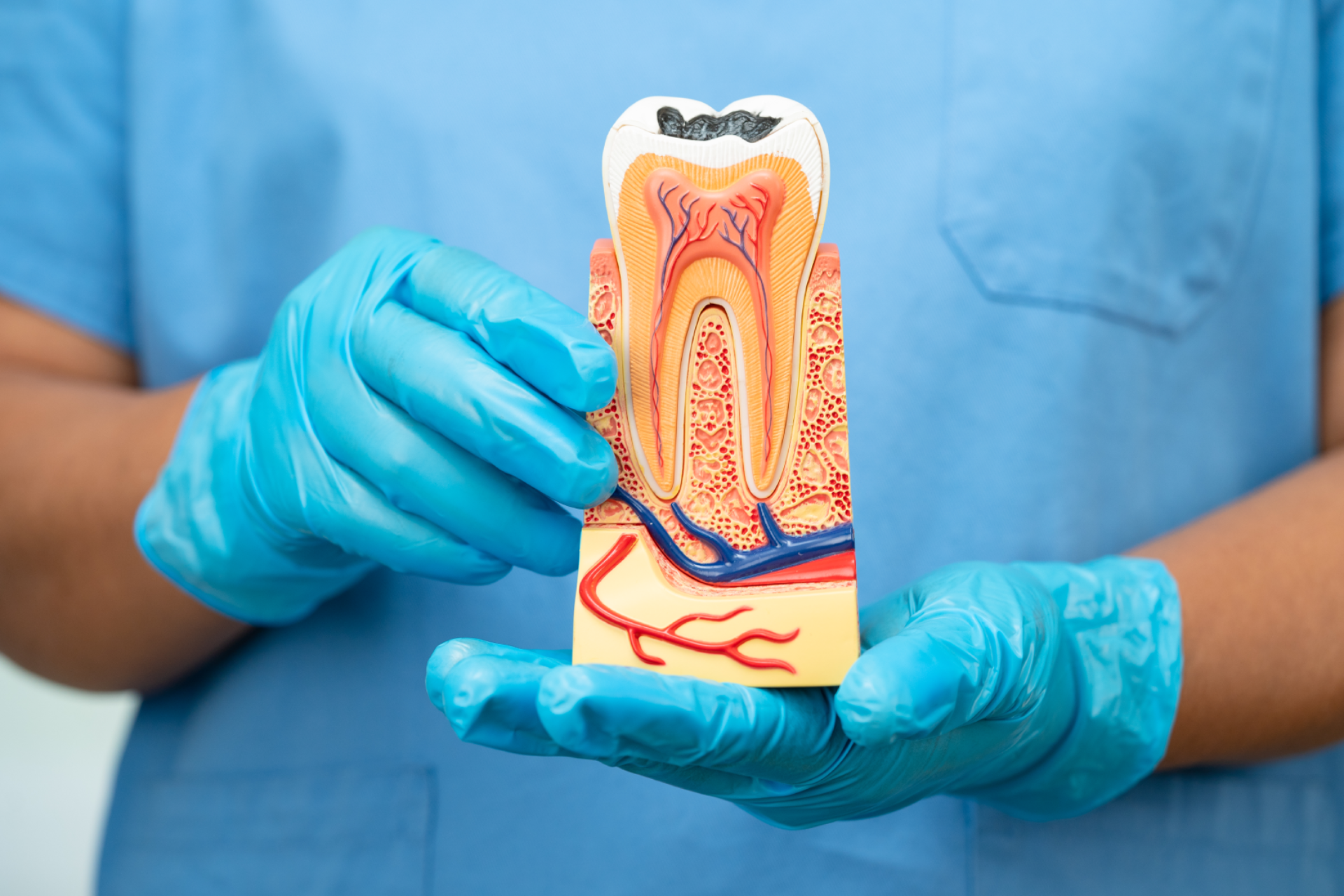
Natural teeth are attached to the bone by the periodontal ligament. It is this structure that enables them to respond, in a controlled manner, to the forces applied during orthodontic treatment.
The implant works differently. Its surface forms a direct bond with the bone through osseointegration. There is no periodontal ligament between the implant and the bone that would allow it to be moved in the same way as a tooth.
This has an important practical implication: if it is necessary to adjust the position of the neighbouring teeth, correct the bite or alter the space where the future tooth is to be placed, it is generally more sensible to do so before the implant is fitted.
Imagine, for example, that an incisor is missing, but the adjacent teeth have tilted towards the empty space. Placing an implant in that space straight away may mean having to accept a less favourable position. With prior orthodontic treatment, it may be possible to reposition the teeth and roots, creating more suitable conditions for restoration.
But ‘Orthodontics first’ is not an automatic rule. It is the result of a plan.
The gap left by a tooth does not necessarily remain the same
When a tooth is lost, the available space may change over time.
Neighbouring teeth may tilt or shift. The opposing tooth, which previously made contact with the missing tooth, may also change position. Furthermore, the bone in the edentulous area tends to undergo changes following tooth loss.
For this reason, simply looking at the visible gap between two teeth can be misleading.
To place an implant, it is not enough simply to have an opening that appears to be wide enough. It is also necessary to assess the position of the roots of the adjacent teeth, the bone volume, the gums, the relationship with the opposing teeth and the space required to construct a crown with the correct proportions.
Orthodontics can, in certain cases, create space. In others, it can redistribute space or correct roots that are too close to the area intended for the implant.
That is precisely why joint planning makes a difference.
What if it were possible to close the gap without having an implant fitted?
This is one of the most important questions, and yet it is sometimes overlooked.
Not all the space created by the absence of a tooth necessarily has to be filled with an implant. In certain situations, orthodontics can bring the teeth closer together and close that gap.
This strategy is particularly well known in certain cases of congenital absence of teeth, such as specific upper lateral incisors or premolars. However, the feasibility of closing a gap depends on many factors: bite type, facial profile, tooth position, size of the gap, aesthetics, dental anatomy and treatment objectives.
In some patients, maintaining or creating space for future rehabilitation is the best solution. In others, closing the gap orthodontically can avoid the need for an implant.
None of these options is universally superior. The decision should be based on the overall diagnosis, rather than simply on the question ‘which tooth is missing?’.
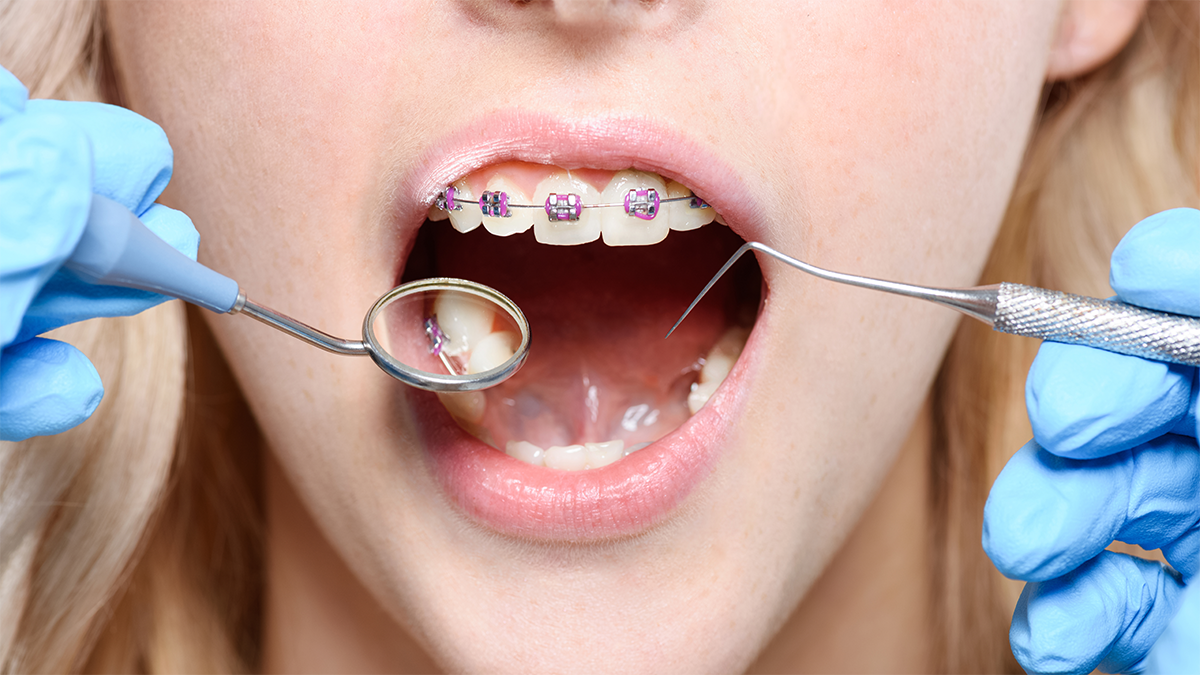
When is the right time for an implant?
When the treatment plan actually involves replacing a missing tooth with an implant, the orthodontic phase can serve a very specific purpose: to prepare the site.
At the end of this preparation, the aim is not only to ensure there is sufficient space for the crown, but also to achieve a suitable position for the roots and a balanced functional relationship with the other teeth.
Only then does it make sense to assess the bone and anatomical conditions required for implant placement.
Depending on the case, it may be necessary to use three-dimensional imaging to assess the volume and anatomy of the bone more accurately. There may also be situations where bone regeneration is required before or during implant placement.
In other words, completing orthodontic treatment does not mean that the next step is automatically to have an implant fitted. It means that a new stage of assessment has been reached, now that the teeth are in their planned position.
There is another important point: once the correct space has been created, it must be maintained whilst the subsequent stages are carried out. Orthodontic retention and coordination between professionals therefore become an integral part of the treatment itself.
What if the implant has already been fitted?
Circumstances may change, but that does not necessarily mean that orthodontic treatment is no longer possible.
Natural teeth can still be moved. The implant, however, will remain in virtually the same position. The orthodontist will therefore need to plan the tooth movements whilst taking this fixed position into account.
In specific situations, an existing implant may even act as an anchor point during certain orthodontic movements. However, this does not mean that the early placement of implants is an appropriate strategy for all cases.
If the implant’s position is not perfectly aligned with the orthodontic plan, this may limit the options available later on.
That is why, when both courses of treatment are already foreseeable from the outset, planning must be carried out before any irreversible decision is taken.
In young people, there is another factor: growth
In the case of adolescents and young people who are still growing, this decision requires extra care.
An osseointegrated implant remains fixed in the bone, whilst the jaws, natural teeth and surrounding tissues may continue to change as the patient grows. Over time, this can lead to differences between the implant and the neighbouring teeth, particularly in areas where aesthetics are important.
For this reason, the placement of implants in patients who are still growing is normally reserved for specific situations and requires an individual assessment.
In such cases, orthodontic treatment can be used to manage the spaces and prepare for a future solution, whilst the final restoration is planned for a more appropriate stage.
The age stated on the identification document, on its own, does not resolve this issue. What is important is to assess each patient’s stage of growth and clinical context.
The right question isn’t just ‘which comes first?’
Where there are misaligned teeth and a missing tooth, the best course of action may be orthodontic treatment followed by an implant. However, it may also involve closing the gap orthodontically, a temporary solution during a particular phase, or, in selected cases, a different course of action.
The key point is to make up your mind before you start.
Orthodontics and implantology should not be viewed as two separate treatments that simply take place one after the other. When both are required for the same patient, each decision influences the next.
At Clinicalvor, the first step is to assess the overall picture: the position of the teeth, the bite, the available space, the roots, the bone, the gums and the patient’s goals. Only then is it decided what treatment is required and in what order it should be carried out.
Because, in this case, whether to fit the denture or the implant first is not a matter of preference. It is a matter of planning.