A sip of cold water, a spoonful of ice cream, or a bite of fruit straight from the fridge. For those with sensitive teeth, these little summer pleasures can cause a sudden, sharp pain that’s hard to ignore.
Summer doesn’t necessarily make your teeth more sensitive. What changes is the frequency of stimuli that can reveal a problem that already existed. Cold drinks, ice cream, citrus fruits, soft drinks, and other acidic foods and beverages become part of your daily routine, making sensitivity more noticeable—sensitivity that, during the rest of the year, might only occur occasionally.
Although it is common, pain caused by cold should not automatically be considered harmless. It may be due to dentin hypersensitivity, but it can also indicate a cavity, a damaged filling, a crack, or inflammation inside the tooth. Managing sensitivity therefore begins with identifying its cause.
Why does the cold cause that shock?
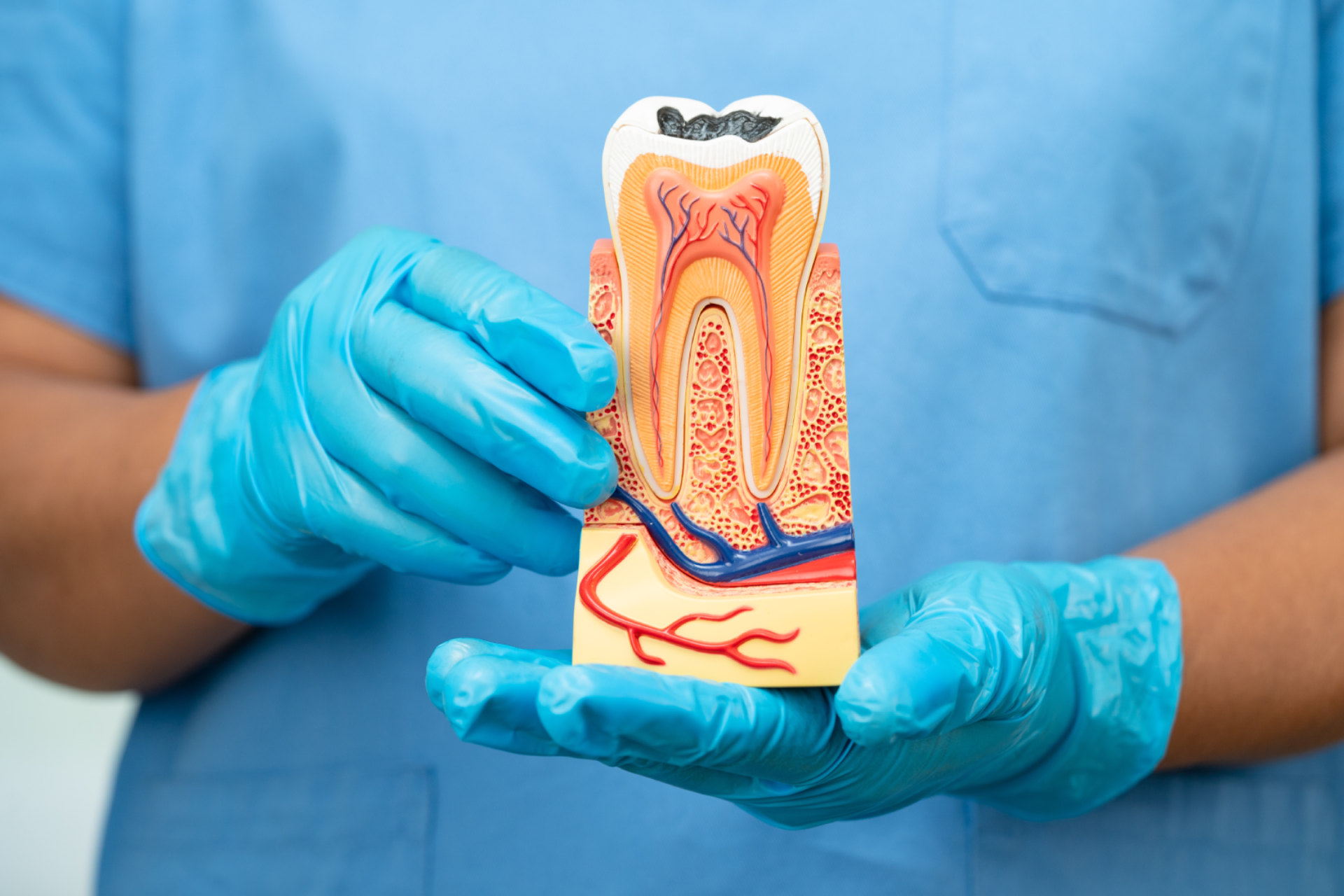
The visible part of a healthy tooth is protected by enamel, the most mineralized tissue in the body. Beneath the enamel lies dentin, a less resistant structure that contains thousands of microscopic channels known as dentinal tubules.
When dentin is exposed, cold, heat, touch, and certain substances can cause the fluid in these canals to move. This movement stimulates the nerve endings inside the tooth and triggers a sudden, localized pain.
Dentin exposure can occur for a variety of reasons. Enamel wear, acid erosion, gum recession, and overly aggressive brushing are among the most common causes. Sensitivity can also develop after certain dental treatments, including teeth whitening, although in these cases it tends to be temporary.
The typical pain associated with dentin hypersensitivity occurs in response to an identifiable stimulus and subsides shortly after the stimulus is removed. However, this characteristic alone does not allow for a definitive diagnosis at home. Several dental problems can produce similar symptoms.
In the summer, the problem becomes more apparent
During the warmer months, consumption of cold beverages, ice cream, juices, soft drinks, and acidic fruits naturally increases. The temperature contrast makes sensitivity more noticeable, while repeated exposure to acids can contribute to the progressive wear of tooth enamel.
The acids found in soft drinks, energy drinks, some juices, and citrus fruits temporarily reduce the hardness of the tooth’s surface. With frequent exposure, the enamel gradually loses its structure. The dentin may become closer to the surface or become directly exposed, increasing sensitivity to cold.
The frequency of consumption is particularly important. Drinking an acidic beverage slowly over several hours prolongs its contact with the teeth. The same is true when you spend the day snacking on acidic fruit, ice cream, or sugary foods.
This does not mean that you need to eliminate all of these foods. The goal is to reduce repeated exposure and prevent the mouth from being constantly subjected to changes in acidity.
Dehydration can also have an indirect effect. Saliva helps neutralize acids, lubricates the mouth, and helps protect dental structures. On hot days, especially during exercise, it’s important to drink water regularly and not replace water with soft drinks or energy drinks.
Not all sensitivity is the same
Dental hypersensitivity is a possibility, not an automatic diagnosis. Before recommending a product or treatment, the dentist should rule out other causes.
A cavity can cause pain when exposed to cold, heat, or sweet foods. A crack can cause a sharp pain when chewing or when pressure is released from the tooth. An old filling may no longer seal properly. Inflammation of the dental pulp—where the nerves and blood vessels are located—can also begin with what seems like mild sensitivity.
The duration of the pain provides important information. When the discomfort disappears quickly after the stimulus, the situation may be less complex. When it persists for several seconds or minutes, occurs for no apparent reason, wakes you up at night, or becomes progressively more intense, an evaluation is necessary.
Location also matters. Generalized sensitivity in several teeth may have a different cause than pain concentrated in a single spot. A tooth that suddenly begins to react to cold deserves special attention, especially if it has never shown this behavior before.
Even the best toothpaste on the market cannot treat a cavity, repair a crack, or cure an infection. That is why a diagnosis must come before treatment.

Habits That Really Help
When the sensitivity is mild and there are no signs of another problem, certain changes can help reduce the discomfort.
Toothpastes designed for sensitive teeth contain substances that help reduce the transmission of stimuli or partially block the dentinal tubules. Ingredients such as potassium nitrate and certain fluoride compounds are used for this purpose.
Results are not usually immediate. In many cases, the toothpaste needs to be used regularly for a few weeks. Brush twice a day with a soft-bristled toothbrush, without applying excessive force. Brushing harder does not necessarily clean better and can worsen wear along the gumline.
After consuming acidic foods or beverages, it is not advisable to brush your teeth right away. The surface of the enamel is temporarily more vulnerable. Rinsing your mouth with water and waiting before brushing helps prevent further wear.
It is also better to drink soft drinks and acidic juices with meals rather than sipping them constantly. Water should remain your main source of hydration.
When a cold food causes pain, avoiding it may provide some relief, but it doesn’t address the underlying cause. The goal shouldn’t be to adapt your entire diet to accommodate sensitive teeth. It should be to understand why your teeth react that way.
When Home Care Isn’t Enough
If the sensitivity persists, the dentist may apply desensitizing products, fluoride varnishes, or materials that protect exposed dentin. When there is loss of tooth structure, it may be necessary to restore the area.
In cases involving gum recession, it is important to assess periodontal health and determine why the gums have receded. Aggressive brushing, gum inflammation, tooth position, or other factors may be involved.
When bruxism is present, tooth wear and small cracks can also contribute to symptoms. Treating sensitivity alone, without considering the forces exerted on the teeth, may provide only limited benefit.
The choice of treatment depends on the cause, the severity of the symptoms, the extent of exposed dentine, and the response to initial measures. There is no single solution for every case, nor is there any product that can replace an individual assessment.
At Clinicalvor, a dental consultation can help identify the cause of sensitivity and determine an appropriate treatment strategy. In many cases, simple measures are sufficient. In others, the discomfort may be an early sign of a problem that should be treated before it progresses.
A more comfortable summer starts with paying attention to the signs.
Tooth sensitivity does not have to stop you from enjoying a cold drink or the occasional ice cream. Nor should it be dismissed as normal simply because it lasts only a few seconds.
Even brief pain is still a signal from the body. It indicates that the stimulus has reached a sensitive part of the tooth, or that there may be an underlying problem that warrants investigation.
Using a suitable toothpaste, limiting the frequent consumption of acidic drinks, brushing without excessive pressure, and staying well hydrated are all useful measures. However, if sensitivity appears suddenly, affects only one tooth, persists after the stimulus has been removed, or worsens over time, a dental consultation should not be delayed.
The aim is not simply to get through the summer without pain. It is to protect the tooth structure and prevent an initially subtle warning sign from developing into a more complex problem.