A tooth starts to hurts. The gum swells up. An abscess may develop. For many people, the conclusion seems obvious: there’s an infection, so an antibiotic is needed.
Not always.
In dentistry, one of the most important distinctions is to determine whether a situation requires antibiotics or whether the problem can be resolved primarily by treating the tooth itself.
Antibiotics play an important role when clinically indicated. The problem arises when they are seen as an alternative to dental treatment.
Because taking an antibiotic may temporarily relieve some symptoms, whilst leaving the underlying cause exactly where it was.
A toothache does not automatically mean a bacterial infection
Not all toothaches are the same.
A deep cavity, for example, can cause inflammation of the pulp – the tissue containing the nerves and blood vessels inside the tooth. When this inflammation becomes irreversible, the pain can be severe, spontaneous and difficult to ignore.
Despite this, an antibiotic may not provide any significant benefit.
The problem lies inside the tooth and needs to be treated locally. Depending on the situation, this may involve root canal treatment, commonly known as a root canal, or, where the tooth cannot be saved, extraction.
The same principle applies to many situations where there is pain associated with the tissues surrounding the root, but there are no signs of the infection spreading.
Current clinical guidelines are clear: in most localised pulp and periapical conditions, dental treatment should take precedence over the prescription of antibiotics.
This helps to illustrate an important rule: the severity of the pain and the need for antibiotics are not the same thing.
So what cures a dental infection?
In most odontogenic infections, it is necessary to address the root cause of the problem.
Imagine a dental abscess. There is a build-up of pus associated with an infection, the source of which may be a tooth with necrotic pulp or the surrounding tissues.
Prescribing just one antibiotic without addressing the underlying cause may reduce bacterial activity for a while, but does not necessarily eliminate the source of the infection.
This is why treatment may involve draining the abscess, root canal treatment or extraction of the tooth, depending on the diagnosis and whether the tooth can be saved.
This concept is known as control of the source of infection.
Where pus is present, allowing it to drain can be crucial. When the source is inside a necrotic tooth, root canal treatment allows the infected tissue to be removed and the root canal system to be disinfected. If the tooth cannot be saved, extraction removes the source of the infection itself.
The Directorate-General for Health specifically states that the use of antibiotics for dental infections is no substitute for dental or surgical treatment.
It is a simple distinction, but it completely changes the way we approach these situations.
When does an antibiotic become necessary?
The situation changes when the infection is no longer confined to the area around the tooth.
If there is spread to neighbouring tissues, cellulitis, a significant increase in swelling, involvement of the lymph nodes or systemic symptoms such as fever and malaise, antibiotics may be required in addition to dental treatment.
There are also situations in which the threshold for prescribing is different, particularly in immunocompromised individuals or those at increased risk of complications.
Even in such cases, antibiotics should not be regarded as a substitute for local treatment whenever this is possible.
The aim is to combine two different measures: controlling the spread of bacteria and eliminating the source of the infection.
The decision therefore depends on the diagnosis, the extent of the infection, the person’s general condition and the possibility of carrying out the necessary dental treatment promptly.
There is no formula along the lines of ‘infected tooth equals antibiotics’.
What if the antibiotic makes the pain and swelling go away?
This is where many dental infections are given time to develop.
After a few days on antibiotics, the pain may ease. The swelling may go down. The person feels better and concludes that the problem has been sorted out.
However, the disappearance of symptoms does not prove that the cause has disappeared.
If a tooth with necrotic pulp remains untreated, for example, the source that allowed the infection to develop may remain present.
The situation may stabilise for a while and then return later.
Therefore, an improvement following a course of antibiotics should not be used as a reason to cancel the recommended dental treatment.
The antibiotic may have done what it was intended to do: help control the infection. That does not necessarily mean it treated the tooth.
They are different objectives.
Taking antibiotics ‘as a precaution’ also has consequences
Antibiotics are not neutral medicines.
They can cause adverse effects, allergic reactions, gastrointestinal disturbances and disruptions to the microbiome. Some antibiotics also pose specific risks that need to be taken into account when deciding whether to prescribe them.
There is also a collective consequence: antimicrobial resistance.
When bacteria develop mechanisms that enable them to survive the effects of antibiotics, infections that were previously easy to treat can become more difficult to control.
The unnecessary, inappropriate or excessively prolonged use of these medicines contributes to this problem.
That is why prescribing correctly does not mean prescribing an antibiotic ‘just to be on the safe side’. It means using it when there is a specific indication, choosing the appropriate option and monitoring the patient’s clinical progress.
You should also not use antibiotics left over from previous courses of treatment, repeat an old prescription or take medication that has been prescribed for someone else.
Two seemingly similar types of toothache may have completely different causes and require completely different treatments.
Some dental infections cannot wait
Although many conditions can be treated during a dental appointment, there are certain signs that require urgent assessment.
Swelling that increases rapidly, particularly when it spreads to the face or neck, warrants attention.
Difficulty opening the mouth, swallowing or breathing; swelling of the floor of the mouth; changes in the voice; or a fever accompanied by a deterioration in general health or signs of a widespread infection may indicate a potentially serious condition.
In these circumstances, simply waiting for the antibiotic to take effect can be dangerous.
Some odontogenic infections can spread to deep tissues of the face and neck and, in rare cases, compromise the airway or cause a serious systemic infection.
In such cases, the priority is urgent medical assessment, and referral to hospital may be necessary.
These situations are rare, but important precisely because they require a very different approach to that used for ordinary toothache.
Antibiotics do have a role to play. It’s just that they aren’t the answer to everything
When there is a dental infection, the most useful question is not simply ‘Do I need antibiotics?’.
The question is: “What is the source of this infection, and what needs to be done to eliminate it?”
In some cases, the treatment involves only local dental treatment. In others, an antibiotic must be prescribed as well. And in the most serious cases, urgent hospital treatment may be required.
That is why a prescription should be based on a clinical assessment and not simply on the presence of pain or swelling.
At Clinicalvor, when a dental infection is suspected, the aim is to identify the cause, determine whether the infection is localised or shows signs of spreading, and decide on the appropriate treatment for that specific situation.
An antibiotic might be exactly what’s needed.
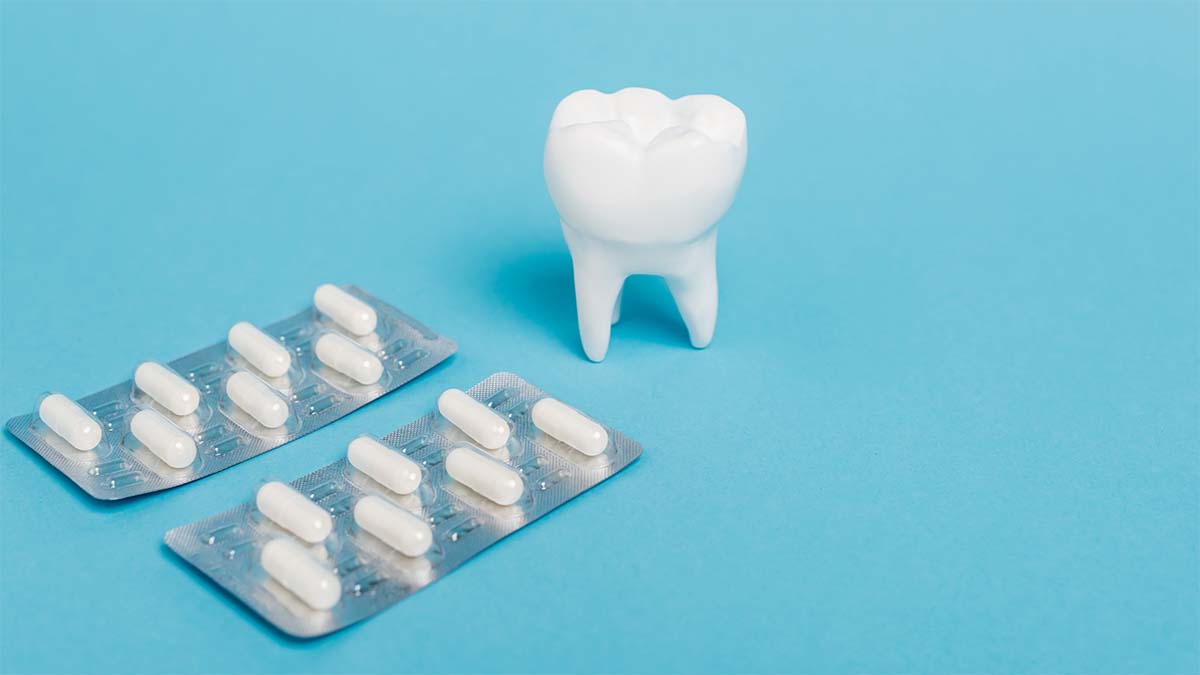
But when a tooth needs treatment, no box of tablets can replace that step.