Some parents wait until the first baby tooth falls out. Others only make an appointment when a cavity appears. And there are parents who make an appointment early on, but end up wondering if they’re overreacting. The truth is that the first pediatric dental visit is rarely about “treatment.” It’s about getting off to a good start. A child’s mouth changes quickly, habits form without warning, and cavities can develop at a surprising speed. Taking a child to the dentist early isn’t a whim. It’s a simple way to reduce risk, gain peace of mind, and prevent the first experience from being an emergency.
The right time isn’t when it hurts; it’s when it begins
The most widely accepted international recommendation is simple: the first visit should take place by the child’s first birthday, or within six months of the first tooth erupting. The reason is practical. By twelve months, it’s already possible to observe development, assess risk, guide habits, and adjust routines before problems arise. At this stage, the dentist isn’t expecting “major interventions.” They’re laying the groundwork.
In real life, not all families can meet this timeline. And that doesn’t mean failure. It means the best time is as soon as possible from now on. If the child is two, three, or four years old and has never been, the visit is still worthwhile. The risk of cavities in childhood is real and can start early, especially when habits such as falling asleep with a bottle, frequent consumption of sugary drinks, repeated snacking throughout the day, or irregular oral hygiene are present.
What’s the point of going early, even when “everything’s fine”?
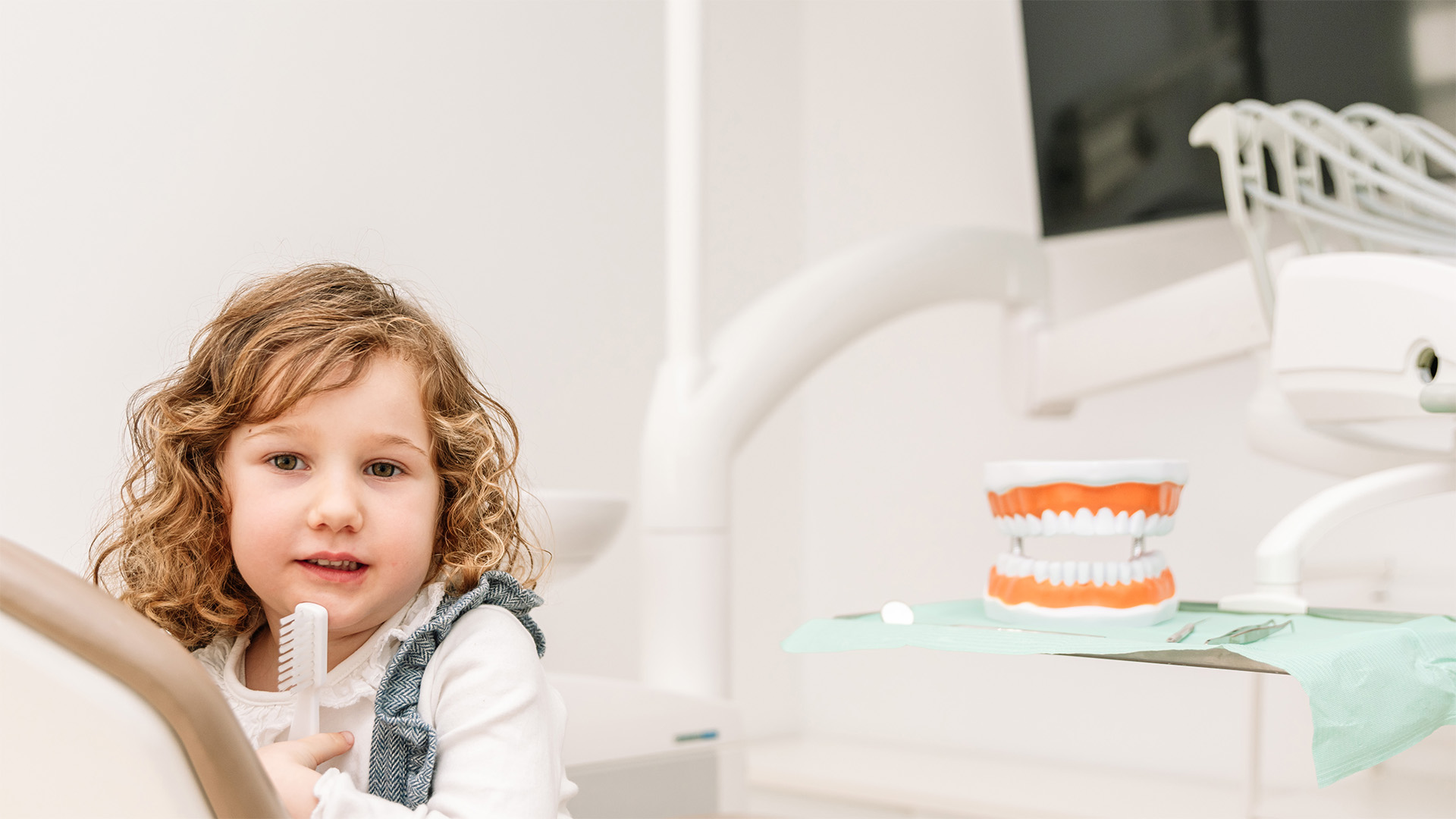
There is one benefit that almost no one mentions, yet in practice it is enormous: normalizing the dentist’s office as a neutral place. When the first visit goes smoothly, the child learns that the dental chair isn’t a punishment. They learn that their mouth can be examined calmly. They learn to cooperate. And parents learn to read the signs.
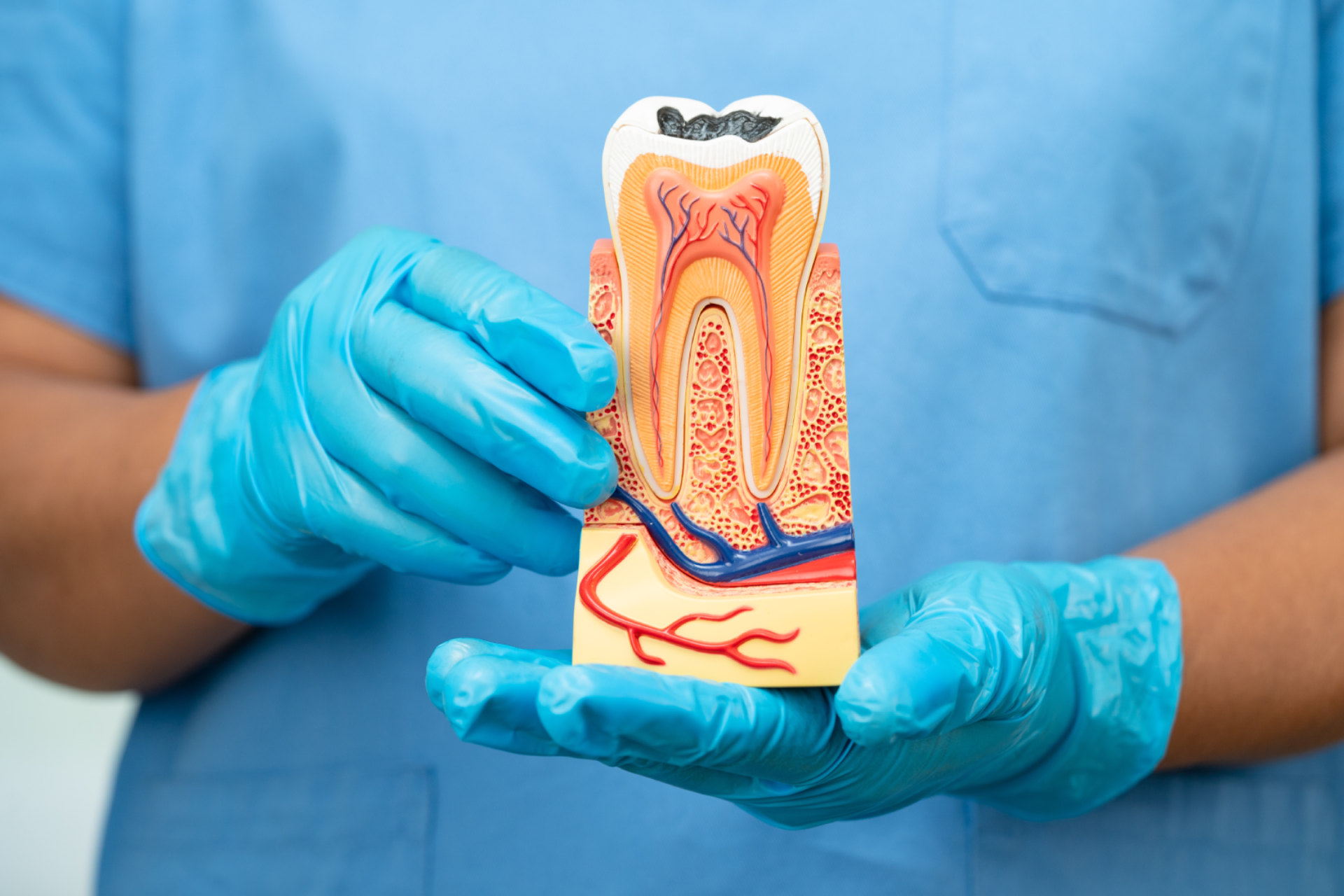
Then there are very concrete clinical benefits. In pediatric dentistry, prevention isn’t just a slogan. It means reducing the likelihood of cavities, gum inflammation, enamel problems, and, later on, more invasive treatments. A cavity in a baby tooth isn’t “a temporary problem.” It can cause pain, infection, disrupt sleep and eating habits, and can complicate tooth development and eruption.
Early consultation also helps detect habits that change the mouth over time. Prolonged pacifier use, thumb sucking, mouth breathing, and certain swallowing patterns can influence the dental arches and bite. Not everything requires immediate intervention, but almost everything benefits from monitoring and guidance. The difference between monitoring and ignoring is that, when the right time to act arrives, the decision is already informed.
How pediatric dental appointments work
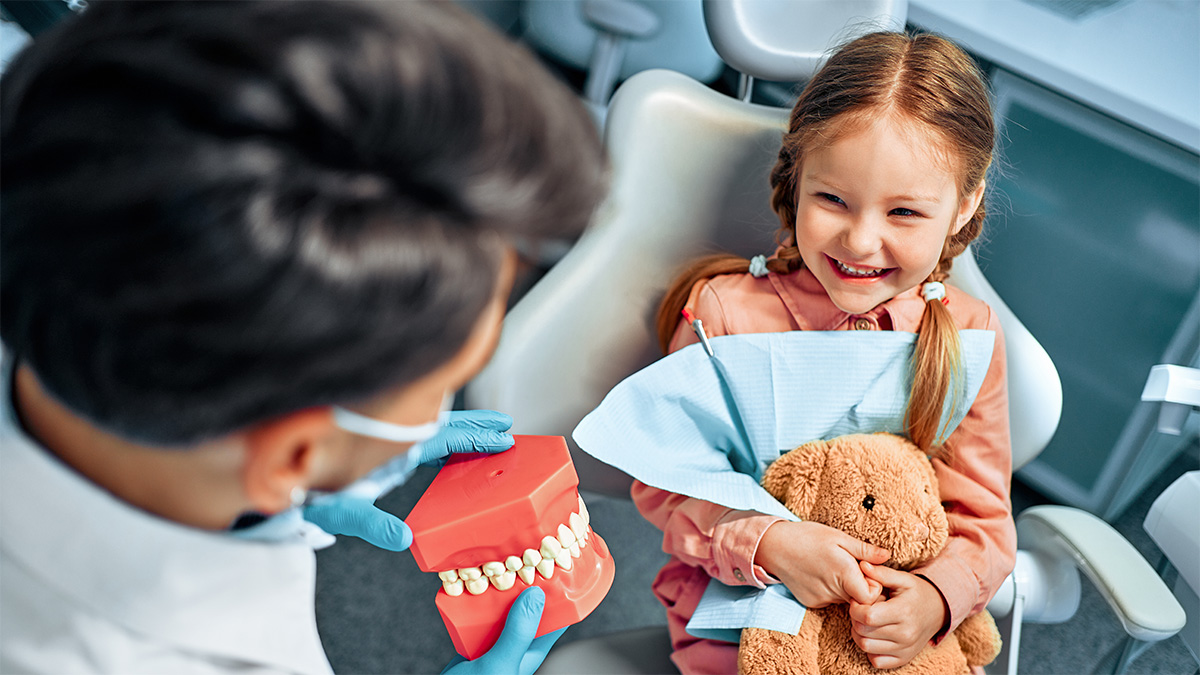
In the approach described by Clinicalvor, the goal is to provide specialized care tailored to the child, with sensitivity to the fears and needs of each age group. In practice, a well-conducted initial consultation begins by building trust. It may include conversation, demonstrations, a brief and gradual examination, and guidance for parents on hygiene, diet, and specific risks. For young children, the examination is often quick and sufficient to establish a preventive plan.
When treatment is necessary, the pace is adjusted to the child’s tolerance and the type of procedure. Modern pediatric dentistry employs communication techniques, positive reinforcement, and—when clinically indicated for more extensive treatments—anxiety management strategies. The goal is not to “force cooperation.” It is to create conditions so that the child feels safe and the treatment is effective.
An important point for parents is to realize that the appointment is not just for the child. It is also to guide the family. Most childhood cavities stem from daily routines, not “bad luck.” When the family understands the mechanism, everything improves: less blame, more method.
Prevention that works: fluoride, sealants, and good habits
There are three key factors that typically have the greatest impact on children’s oral health: hygiene, diet, and professional preventive care. Hygiene isn’t just about brushing. It’s about brushing properly, using age-appropriate fluoride toothpaste, and with parental supervision for years—not just months. Diet isn’t about “banning sweets.” It’s about reducing sugar intake and preventing the mouth from being constantly in an acidic state, especially due to frequent snacking and sugary drinks.
On the clinical side, fluoride remains one of the most studied preventive tools, including in-office fluoride varnishes applied to children at higher risk of cavities. Fissure sealants, applied to permanent back teeth when indicated, are another tool with robust support, especially in children and adolescents, because they protect areas where brushing easily fails.
The key takeaway is this: prevention is not an abstract concept. It is a combination of simple habits and targeted professional interventions, tailored to the child’s risk. And risk is not a label. It is something that changes with age, diet, hygiene, family history, and context.
How often should you go, and when is it best not to wait?
The frequency of checkups depends on the risk. Some children benefit from checkups every six months, while others need closer monitoring during specific stages, such as when the first permanent molars come in or when there is a history of recurrent cavities. The key is to have a plan.
There are signs that warrant a visit without waiting for the “next checkup”: pain, persistent sensitivity, brown or white spots on the teeth, bad breath that doesn’t improve with good oral hygiene, frequent gum bleeding, swelling, dental trauma, or sudden changes in eating or sleeping behavior. Children aren’t always able to explain exactly how they feel. Sometimes they show it through irritability, refusal to eat, or waking up at night.
Another important point, especially in Portugal, is the dental voucher. The Clinicalvor website mentions participation in the National Oral Health Promotion Program and the provision of care under the dental voucher, which can facilitate access for eligible age groups. For many families, this makes a difference in the decision to start early.
The right start makes for a simpler future
Taking a child to the dentist early on isn’t about creating problems where none exist. It’s about reducing the likelihood that problems will arise—and if they do, ensuring they’re detected at a stage when they’re easy to resolve. Pediatric dentistry works best when the first visit is a calm experience, when parents leave with clear guidance, and when the child realizes that the dentist’s office is a safe place. Over time, this translates into fewer emergencies, less fear, and better oral health. Prevention isn’t just a nice idea. It’s a well-guided routine.
References
https://www.aapd.org/assets/1/7/DentalHomeNeverTooEarly.pdf
https://www.aapd.org/globalassets/media/policy-center/year1visit.pdf
https://www.cochranelibrary.com/cdsr/doi/10.1002/14651858.CD002279.pub2/full
https://www.cochranelibrary.com/cdsr/doi/10.1002/14651858.CD001830.pub5/full
https://www.sns24.gov.pt/pt/tema/saude-oral/cheque-dentista-para-criancas/
https://www.clinicalvor.pt/medicina-dentaria/odontopediatria/